Measuring accurately is critical to your sewing and quilting success. There are many tools available to help with measurements. Some are used for either general sewing or quilting and some are specific to a particular area of sewing.
The following tools are the foundation of a stitcher’s toolchest and can be used for any type of sewing:
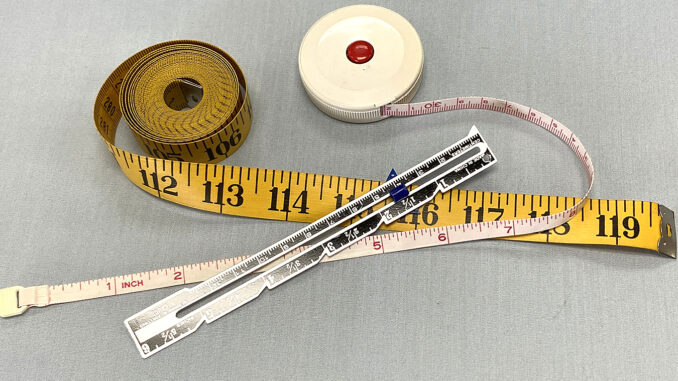
•Measuring tape: I still have the 60” plastic coated tape measure from my high school sewing days! Yes, it’s a bit battered but still usable. The tape measure is used in garment sewing to help align patterns pieces on the grain, check body measurements, etc. Tape measures have both US and metric markings. For quilting, a 120-inch tape measure is a big help in determining the width and length of quilts for borders and trimming.

•Seam Gauge: I have several of these and keep a couple next to my sewing machines. This is a small 6” metal ruler with a movable tab in the center to allow you to set a measurement. Originally used for marking hems, I find this my most reached for sewing tool! If I need to make multiple markings of the same measurement, I can set the tab at the needed amount and easily mark without searching for the correct measurement.
For those of you making garments and patterns adjustments, you may find these measuring tools good ones to have:
•French curve: curved ruler that can help with armhole and neckline adjustments on your pattern.
•Expandable button gauge: This is very handy for marking buttonhole placement! The device will expand to easily mark multiple buttonholes without having to measure and figure the distance between each.
Quilters have a large selection of measuring tools in many different sizes, shapes, and brands.
•Squares and rectangles: These are the foundation rulers that quilters use most often for measurements. The 6-1/2” x 24”; 6-1/2” x 12”, 12-1/2” x 12-1/2”, and 6-1/2” x 6-1/2” rulers are the ones quilters reach for again and again. A good quilting ruler should have easily readable markings that will read from left to right OR right to left to accommodate both left- and right-handed users. Additional markings needed on the ruler are 45- and 60-degree lines for diagonal cuts. These rulers will be made from plastic and will be at least 1/8” – 1/4” thick to allow the blade of the rotary cutter to roll against the edge for cutting.
•Specialty rulers: These are rulers in various shapes and sizes for making other shapes used in quilting. Some of these will be specific to a single pattern or block; others can be used with many different patterns and blocks. Most of us who quilt have a selection of both! Specialty rulers include the 60-degree triangle ruler, double wedding ring rulers, hexagon ruler, diamond ruler, flying geese ruler, etc. The list is almost endless!
Accurate measuring is a vital part of the sewing/quilting process. Investing in quality and accurate tools to use will help ensure a successful project.
-submitted by The Sewing & Vacuum Center