At Christian Family Radio, we love spotlighting ministries in our community that are walking with people through some of the hardest seasons of life and showing them the love of Jesus. One of those ministries is Hope House, whose mission is to alleviate physical and spiritual poverty through the hope of Christ.

Recently, we sat down with Stephanie Kechey, director of Program Living at Hope House Ministries, to hear about the life-changing work happening both inside their residential programs and inside the Warren County Jail.
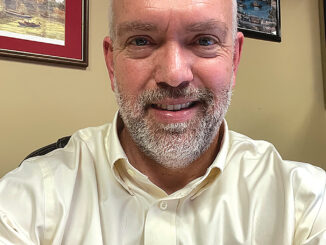
Stephanie Kechey, Director of Program for Living Women, visits with morning show co-host Derek Gregory to discuss the new trauma class.
What Is Program Living?
Program Living is at the heart of Hope House’s work. It’s a Christ-centered residential program designed to help men and women break free from addiction and step into a new way of life.
•For men: a 12-month residential program.
•For women: a 9-month program, shortened to help mothers who are working to reunite with their children.

Throughout their stay, participants are surrounded by community and discipleship. They take practical classes like Faith and Finance, Healthy Conflict Resolution, Parenting, and Work Life, and they study the Bible together with local volunteers and mentors.
Stephanie explained it this way: “Because they’re with us for so long, it really becomes home. We get to be part of their journey, walking with them through the ups and downs of life, always pointing them back to Christ.”
Bringing Hope into the Jail
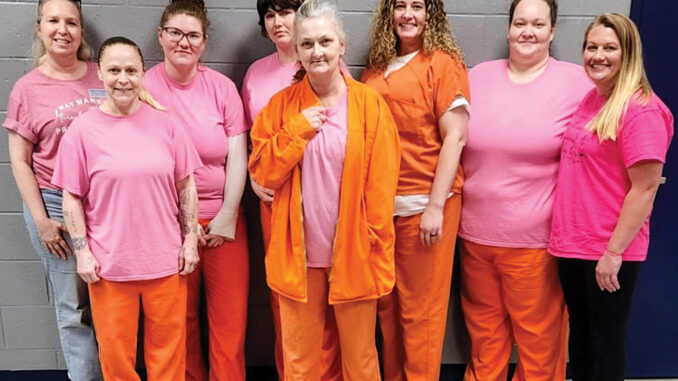
Beyond the residential programs, Hope House has also begun a powerful ministry for women in the Warren County Jail. The class is called Broken Crayons Still Color – a simple phrase with a big truth: even when life feels shattered, God can redeem and restore.
The group is intentionally small, no more than 12 women at a time, and runs for eight weeks. Stephanie, alongside former graduates of Program Living and community volunteers, leads the sessions.
The goal is to help women process their trauma through the lens of Scripture, shifting their identity away from past mistakes and pain and toward who they are in Christ.
“Trauma is a result of living in a broken world,” Stephanie shared. “But Jesus has already carried that pain. We don’t have to live stuck in our past – our identity is in Him.”
The first graduating class of the new trauma course offered to women in Warren County Jail.
Stories of Transformation
Change doesn’t always happen overnight, but Stephanie has seen God soften hearts in amazing ways.
She told us about one woman who came to the class reserved and quiet. For weeks she kept her guard up – until one day she shared through tears that her grandmother, the only steady person in her life, had passed away while she was in jail. She felt completely alone and hopeless.
By the end of the course, her outlook had shifted. She told Stephanie, “I’ve learned there are people who love me and will be there for me. With Christ, I’m not alone.”
Another participant began the class joking and deflecting, never serious. But as the weeks went on, she slowly lowered her walls. When emotions surfaced, she confessed, “I don’t know why I feel like this.” Stephanie reminded her, “You’re emotional because that’s how God created you – and that’s okay.” Those small breakthroughs are signs of the Holy Spirit at work.
Why Addressing Trauma Matters
For Stephanie, tackling trauma isn’t optional – it’s central to pointing people to Christ.
“All through the Bible, you see trauma,” she said. “But what makes the story beautiful is that God redeems it. Trauma doesn’t have to define us. Our identity isn’t what happened to us or even what we’ve done. Our identity is in Jesus, who covered our brokenness at the cross.”
In the world’s eyes, trauma can become a permanent label. But Stephanie reminds the women – and all of us – that in Christ, we are new creations. We don’t have to keep repeating old patterns. We can live from His victory, not our past pain.
How You Can Help
Hope House depends on the love and prayers of the community to continue this ministry. Here are some ways you can join in:
•Pray for the women in jail, their families, and the Hope House staff leading them.
•Volunteer to help with classes, discipleship, or simply showing up to walk alongside women who are learning to trust again.
•Write letters of encouragement. These can be sent through Hope House and shared with the women in class.
•Donate supplies like folders, binders, colored pencils (yes, even broken pencils still color!), or Bibles for women who don’t have one.
If you’d like to learn more or get involved, reach out to Stephanie@HopeHouseBG.com or visit HopeHouseBG.com.
At CFR, we’re thankful for ministries like Hope House who remind us that no one is too far gone, too broken, or too lost for the love of Christ. In His hands, broken crayons still color – and broken lives can be made whole again.
-by Miranda Power