When I visited other countries like the Domincan Republic and Columbia, I witnessed a lot of crazy driving. In those countries, the motorcycles dart in and out of traffic and vehicles are continually cutting each other off. Sometimes it seems as though Bowling Green drivers adopt these same dangerous driving traits. In the blink of an eye a car accident can happen. You can be minding your own business, having a relaxing drive, and boom – be struck by another vehicle. Chances are high that you have probably either been in an accident as a driver or a passenger. Minor accidents can cause you major injuries. Your injuries can be way worse than the amount of damage your vehicle may have sustained.

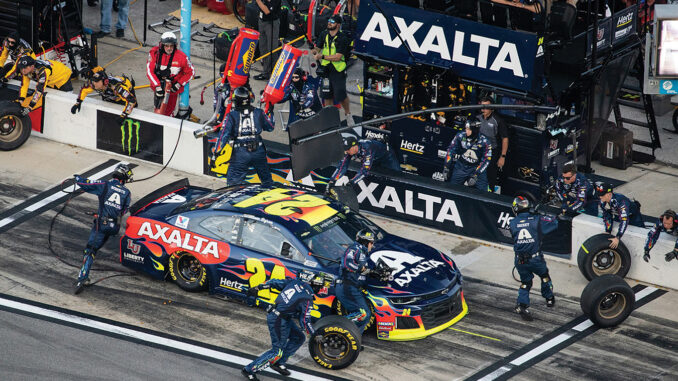
Let’s talk for a moment about professional NASCAR drivers. Driving at 200+ mph speeds when they get in an accident, the car gets hammered! NASCAR accidents can cause a race car to fly into the air, roll multiple times, and even end up smashed from front to back. When you are watching a NASCAR race, though, what are you looking for immediately after an accident? That’s right, to see if the driver is okay! The majority of the time they can walk away from an accident without much injury at all. How is that? The car is totally destroyed but they are only a little banged up.

Now I know that NASCAR drivers have a steel cage around them, but the cars they drive are made to crumble under impact. Even with intense damage to the car, they are often walking away without significant injury.
So why do normal people in minor accidents sometimes walk away with intense whiplash, neck pain, or back pain and NASCAR drivers can walk away from a powerful wreck? To answer this question, we have to refer back to the 1600’s when probably one of the smartest humans who ever lived, Sir Isaac Newton, wrote his book called Principia Mathematic. In that book, Newton describes the three Laws of Motion which explain how whiplash and injury occur during an accident.
Newton’s first law of motion is the most important to car accident victims and is known as “the law of inertia.” It states that an object at rest will remain at rest unless acted on by an unbalanced force. An object in motion continues in motion with the same speed and in the same direction unless acted upon by an unbalanced force. What this law means is that there is a natural tendency for objects to keep on doing what they are already doing.
As an example of this law of inertia, think about the crash test dummies you see on television sometimes. A car races down a track and hits the wall at the end. When the crash test dummies are not wearing their seat belt, they will continue to move in the same direction as they were going and will fly through the windshield. Statistics show that not wearing your seatbelt leads to more deaths (due to being thrown around like a rag doll inside the vehicle or being ejected outside of the vehicle), which is why we need to wear seatbelts.
Although I’m all for seatbelts, they don’t cause you to be injury-free. If the crash dummy car hits the wall, it comes to a complete stop. The body wants to continue moving forward, but if it is strapped into the seat with a seatbelt, then it will also come to a stop. So, think about what is not strapped in that will want to keep moving forward! That’s right, it’s your head! This is what causes whiplash and injury to your neck.
So, let’s go back to the issue at hand. How can someone have a minor accident yet walk away with major whiplash, neck, or back injury? Typically, we think that the less damage your vehicle has received the less you will be injured. Auto insurance companies want you to think this way, too, so they can settle your claim for the least amount of money. Unfortunately, this is not always the case.
Instead of thinking of your car moving down the road, think of your car sitting still at a traffic light. Let’s imagine another vehicle comes up behind you and taps your vehicle going just eight mph. Based on how cars are made, there will be little to no damage to your car, however, you can suffer neck strain and whiplash from just that little impact. The National Health and Medical Research Council Road Accident Research Unit at the University of Adelaide, South Australia, published a study that showed, “Neck strain can occur in individuals involved in crashes of relatively low severity. Crash severity is positively correlated with initial injury severity…”
No one likes to be involved in a motor vehicle accident. When it happens, even a minor one can be damaging to you. The next time you’re in an accident, if you do not have life-threatening injuries, it is a time to be thankful, but don’t underestimate smaller injuries like neck strain or whiplash. If you are unsure if you have any injuries, you should go ahead and get yourself checked out. Doctors of Chiropractic are excellent at assessing and treating neck and back injuries sustained from motor vehicle accidents. The one great thing about living in Kentucky is that every insured driver carries no-fault insurance that covers bodily injury up to $10,000, even if you are the one at fault for the accident. This amount of money is already on your policy for you to use as needed for healthcare after an accident. If you wait too long before getting evaluated, you risk the insurance company not covering your treatment or possibly causing your acute injuries to become more difficult to treat.
-by Dr. Brandon Crouch
About the author: Dr. Brandon Crouch has been a Chiropractor with Crouch Family Chiropractic for over 20 years. Dr. Crouch is an advocate for being proactive when it comes to your health and encourages people to make healthy, informed decisions. For more information or questions, you can contact him online at: www.crouchfamilychiro.com or find him on Facebook at: www.facebook.com/CrouchFamilyChiropractic.
Disclaimer: This article is used for educational and informational purposes only. It is not intended to diagnose, treat, or cure any specific condition. If you have questions or concerns, please talk with your doctor.